
PVC Aluminum Duct Hose: Flexible HVAC Combi Duct Guide for Air, Chillers and Blowers
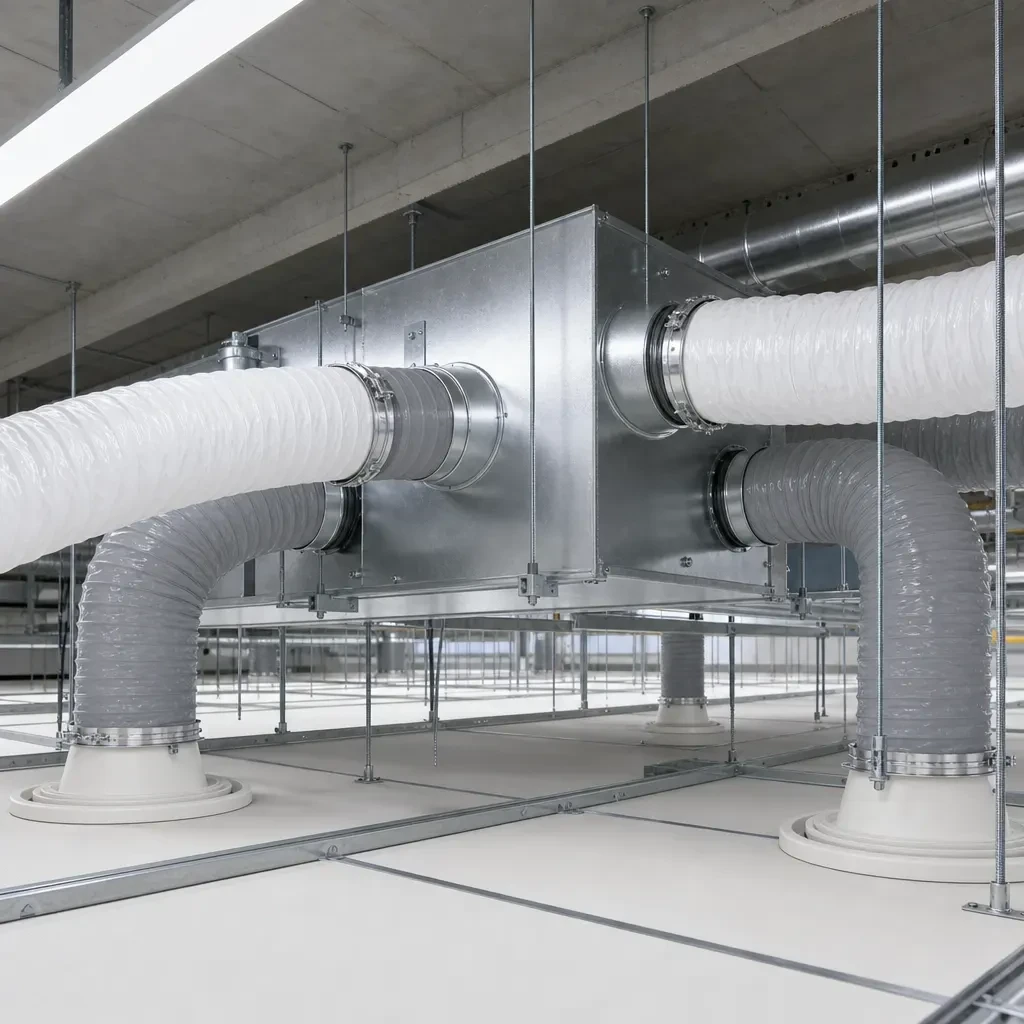
Guide to the PVC aluminum duct hose (PVC aluminum combi duct): PVC foil bonded to aluminum with a spring steel wire helix, -20 to +150 °C, 51-406 mm diameters, 10 m lengths, about 1:10 compression, plus HVAC, chiller and blower applications.
The ECOOSI PVC aluminum duct hose, often called a PVC aluminum combi duct, is a light flexible duct made from PVC foil bonded to aluminum over a spring steel wire helix. It moves air for air conditioning, ventilation, chillers, dehumidifiers and blowers, works from -20 °C to +150 °C, compresses axially at around 1:10, and is supplied in diameters from 51 mm to 406 mm in 10 m lengths.
This guide covers the construction, the sizes and temperature range, the colour options, the applications it suits and the checks that matter at installation.
What Is a PVC Aluminum Duct Hose?
It is a two-material flexible duct. A PVC skin is bonded to a layer of aluminum foil, and a spring steel wire helix is wound into the wall to keep the circular profile. The combination is what makes the duct practical for everyday air work:
- PVC outer skin gives an abrasion-resistant, washable surface that handles moisture and general site handling.
- Aluminum foil layer gives the wall its shape memory, a smooth bore and a reflective surface, so the duct keeps a clean airflow path when bent.
- Spring steel helix holds the round profile under suction and lets the duct compress for transport and storage.
The result is a light duct that stays flexible at low temperature, resists kinking at a small bend radius and can be cut to length on site with a knife.
Construction at a Glance
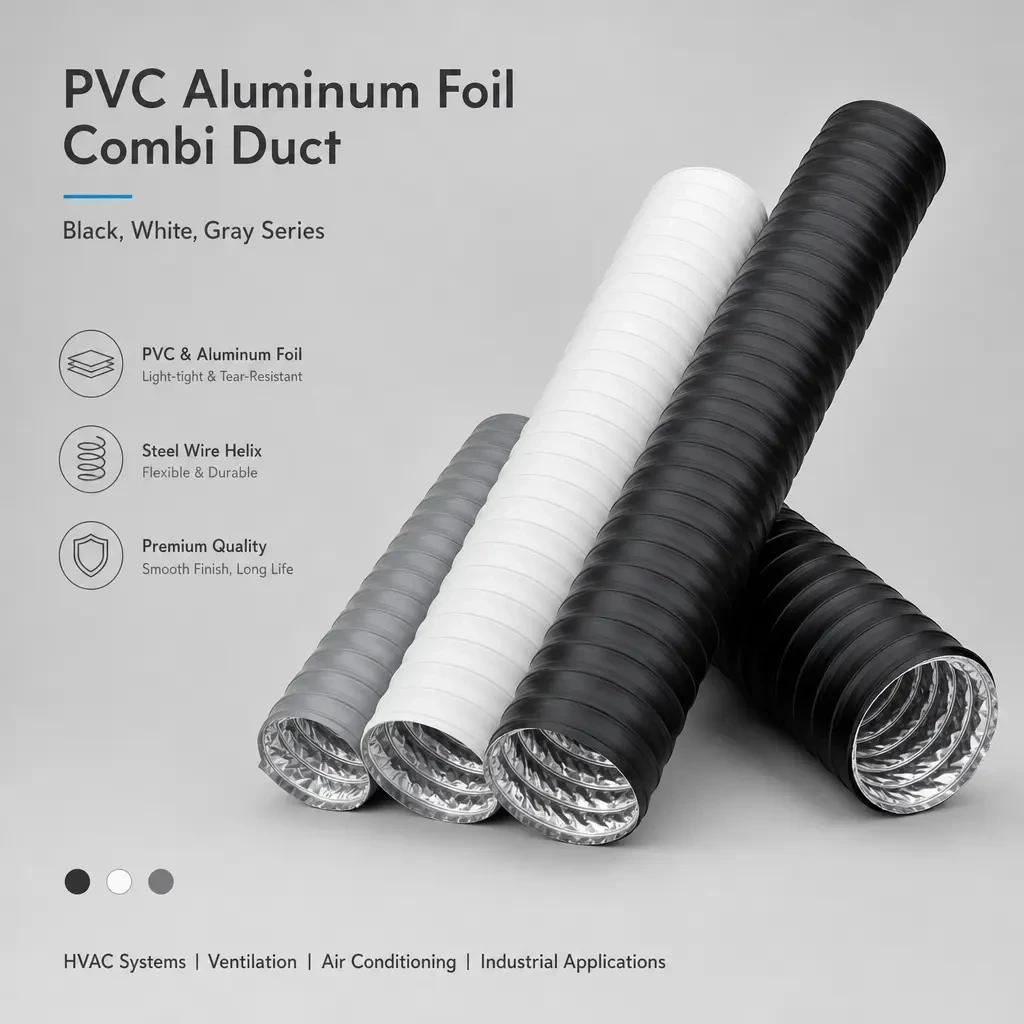
- Wall — PVC foil bonded to aluminum foil in a single flexible laminate.
- Helix — spring steel wire, spiral wound and bonded into the wall.
- Bore — smooth aluminum surface for low friction.
- Colours — black, white and grey.
- Fire performance — flame and fire retardant build.
Sizes, Temperature and Specifications
| Parameter | Value |
|---|---|
| Material | PVC foil bonded to aluminum, spring steel wire helix |
| Inner diameter | 51 mm to 406 mm |
| Standard length | 10 m per piece |
| Temperature range | -20 °C to +150 °C |
| Compression | Axially compressible, about 1:10 extension rate |
| Bending | Small bending radius, kink resistant |
| Weight | Light, one person handling for most diameters |
| Fire performance | Flame and fire retardant |
| Connection | Push over a spigot or collar, secured with a clamp |
Two numbers decide most jobs: the air temperature at the outlet and the diameter the blower or diffuser expects. Stay inside -20 °C to +150 °C, and match the duct bore to the spigot rather than stretching a smaller duct over a larger collar.
Flexibility, Compression and Bend Radius
The duct compresses axially to roughly one tenth of its extended length, which is why it suits service work: a full 10 m run fits in a van or on a shelf, and a length can be pulled out as the route demands. A small bending radius lets it turn out of a ceiling void and into a diffuser without an elbow fitting, and the low-temperature flexibility keeps the wall supple for chiller and cold air supply work rather than stiffening in a cold plant room.
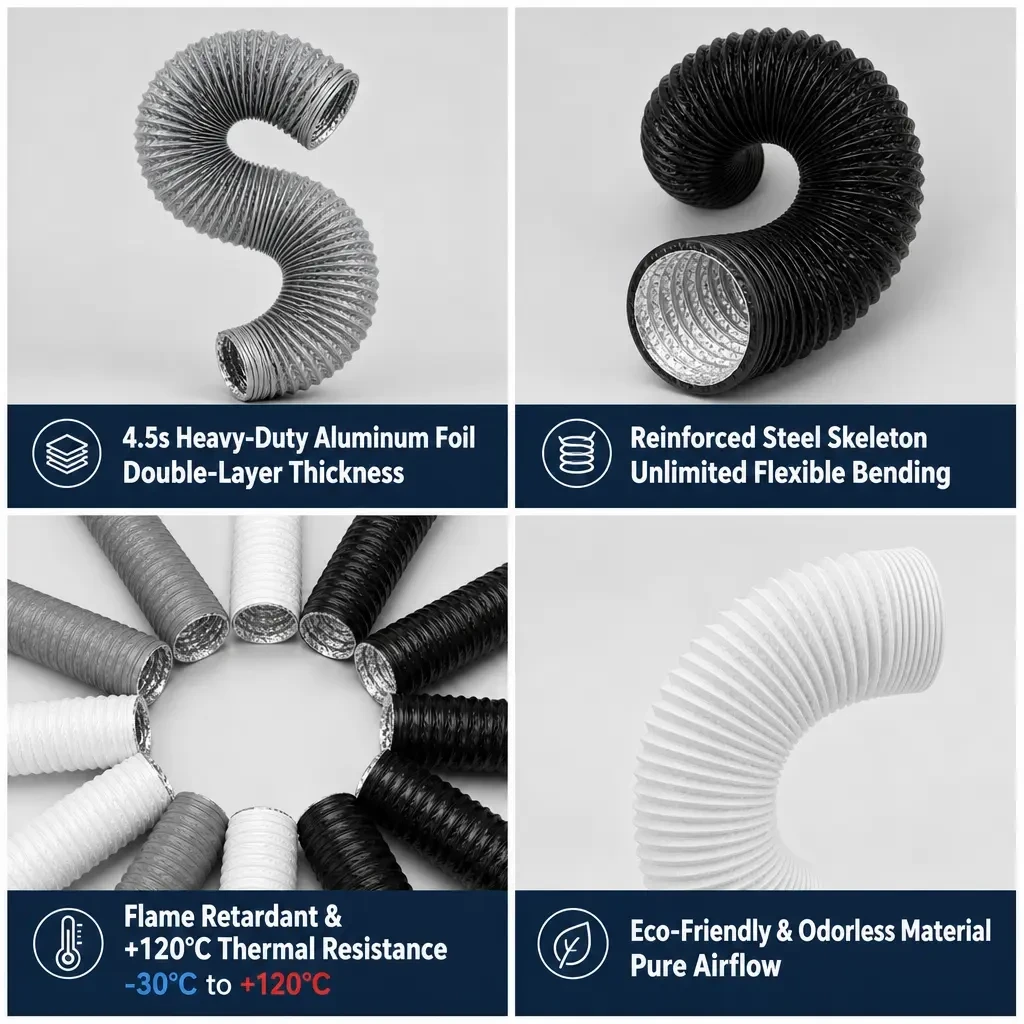
A duct that kinks in a tight bend loses flow exactly where the run needs it most. Keep bends as gentle as the space allows, and where a tight turn cannot be avoided, support the duct on both sides of the bend so the helix does not take the load.
Colour and Light-Blocking Options
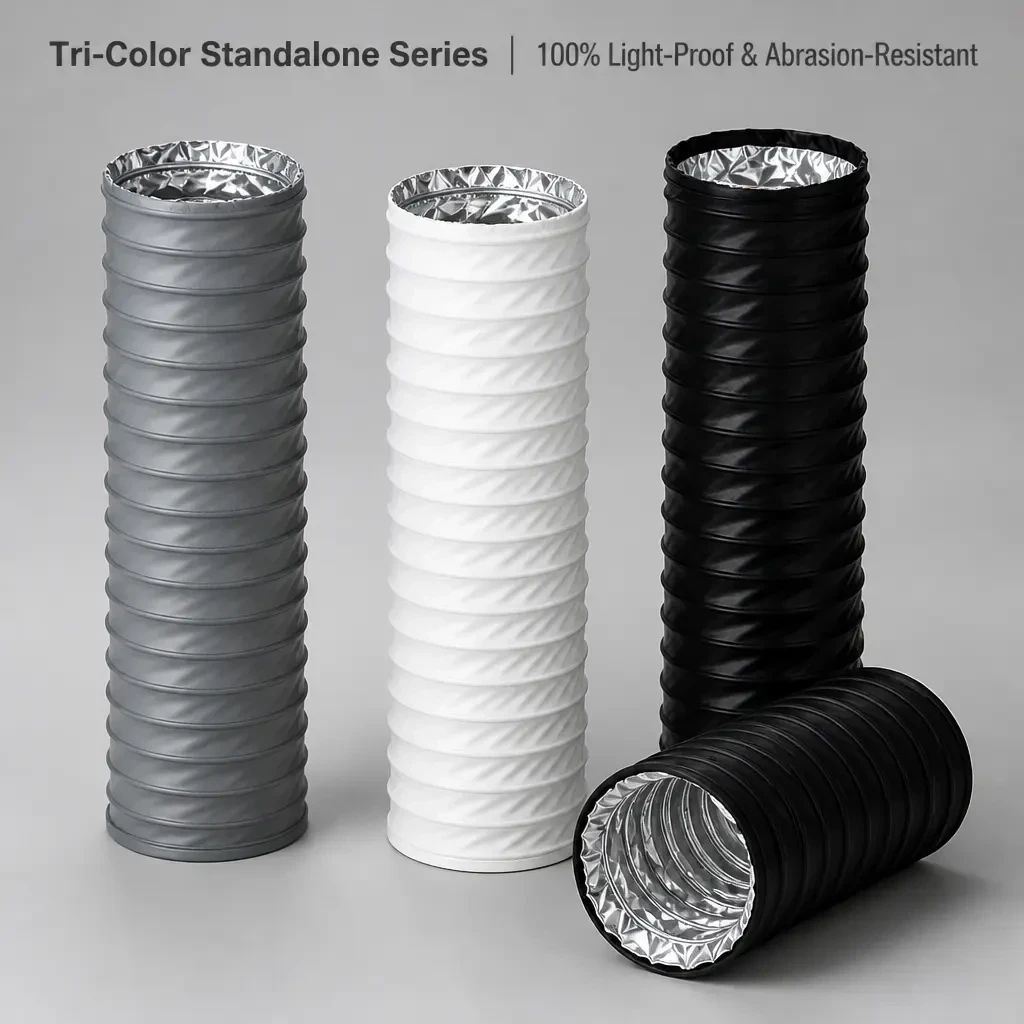
The range comes in black, white and grey. The black series is light-blocking and abrasion resistant, which matters where light transmission through the duct wall is unwanted, or where the duct sits in a visible run and should disappear against a dark ceiling. White suits lab and clean-area ceilings, and grey is the neutral choice for plant rooms.
Typical Applications
The duct is used wherever air has to be moved from a unit, a blower or a plenum to a diffuser or a work area:
- Air conditioning and ventilation ductwork — flexible branch connections between air handling units, plenums and ceiling diffusers.
- Chillers and cold air supply — spot cooling and cold air distribution where the wall has to stay flexible at low temperature.
- Dehumidification — connecting dehumidifiers and drying equipment to the space being treated.
- Confined space ventilation — portable blower duct for tanks, pits and manholes before entry.
- Fans and blowers — utility blowers, axial fans and general air movement equipment.
- Wave pool and leisure blowers — high-volume air supply ducting on blower outlets.
Installation Notes
- Cut square and clean. A square cut seats better on the spigot and stops the helix from unravelling.
- Use a clamp on every joint. A worm-drive clamp or a quick-release band holds the duct on a spigot far better than friction.
- Support long horizontal runs. Hangers every 1.5 m to 2 m stop the duct sagging and keep the helix from carrying the full weight.
- Leave a short straight section at the unit outlet. A duct that leaves a fan outlet at an immediate bend loses flow and adds noise.
- Keep the wall clear of sharp edges. The PVC skin resists abrasion but will wear through on a cut bracket or a rough thread.
- Do not over-compress on installation. Pull the duct out to the length of the run so the helix is relaxed and the bore is round.
Frequently Asked Questions
What is a PVC aluminum duct hose made of?
PVC foil bonded to a layer of aluminum foil, with a spring steel wire helix bonded into the wall. The aluminum gives the bore its smooth surface and shape memory, and the PVC gives the outer skin its abrasion resistance.
What is the temperature range?
-20 °C to +150 °C. The wall stays flexible at the low end, which is why the duct is used for chiller and cold air supply work as well as warm air.
Which diameters and lengths are available?
51 mm to 406 mm inner diameter, supplied in 10 m lengths. Custom lengths and other diameters can be made for project and OEM orders.
How much does it compress?
About 1:10 axially, so a 10 m duct compresses to roughly 1 m. That is what makes it practical to carry and store on service work.
Is it suitable for cold air and chillers?
Yes. The low-temperature flexibility keeps the wall supple in cold plant rooms and on cold air supply runs, without the stiffening that affects some thinner foil ducts.
Can I get a black light-blocking version?
Yes. The range is available in black, white and grey, and the black series is light-blocking and abrasion resistant while keeping the same aluminum-lined construction.
Is it flame retardant?
The duct is built with a flame and fire retardant PVC and aluminum laminate. Check the requirement for the specific installation with your local code before specifying it for a plant room or a public building.
Choosing the Right Duct
For everyday air movement — air conditioning branch runs, chillers, dehumidifiers and blowers — the PVC aluminum combi duct covers 51 mm to 406 mm and -20 °C to +150 °C with about 1:10 compression. The PVC ducting range covers related PVC duties, the aluminum ducting range covers higher pressure and higher temperature foil builds, and the four-layer aluminum foil guide explains when a heavier wall is worth the extra cost. For diameters, samples or OEM packaging, contact the ECOOSI team.
Related Articles
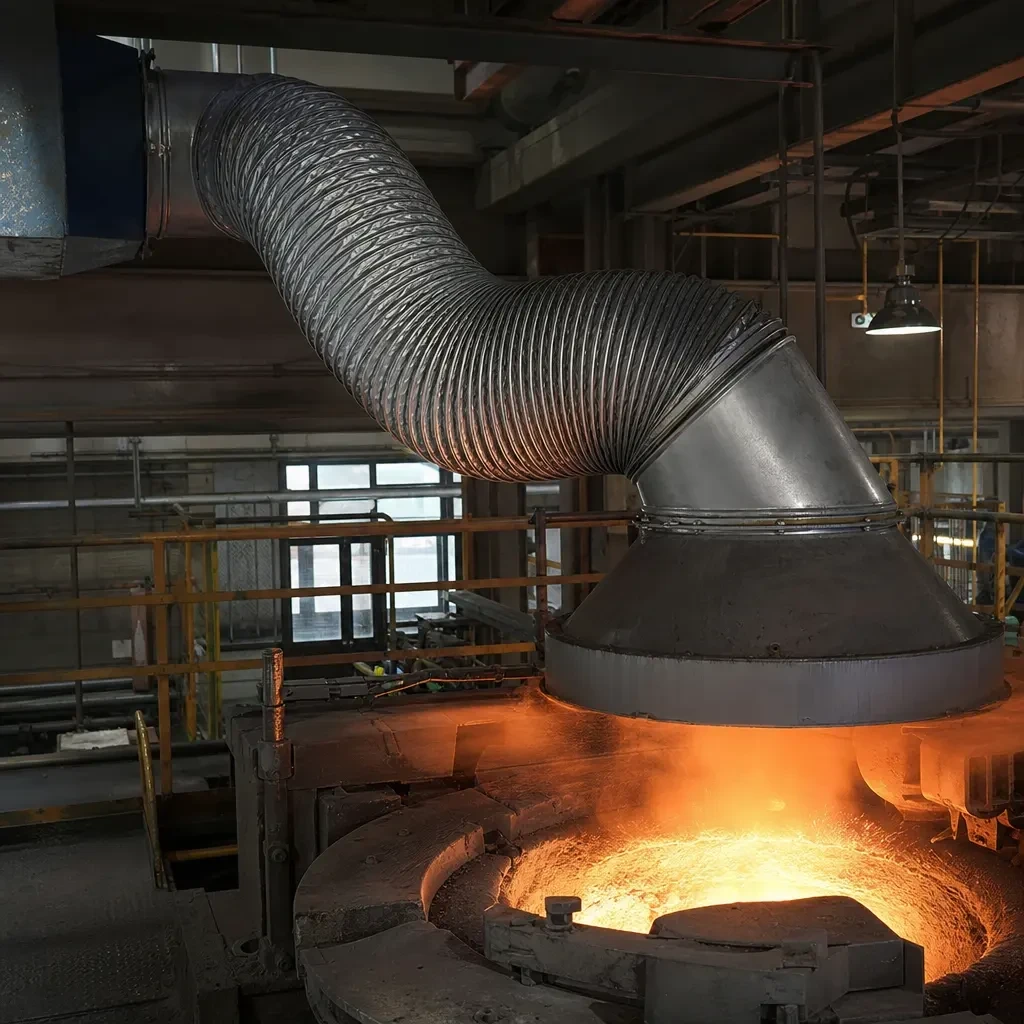
800 °C High-Temperature Ducting Hose: 3-Layer High-Silica Fiberglass Guide for Furnace and Engine Test Exhaust
Guide to the ECOOSI 800 extreme high-temperature ducting hose: 3-layer coated fiberglass and high-silica composite, external galvanized clamp-profile helix, -60 to +800 °C, 50-1000 mm diameters, for furnace exhaust, engine test cells and hot dust extraction.
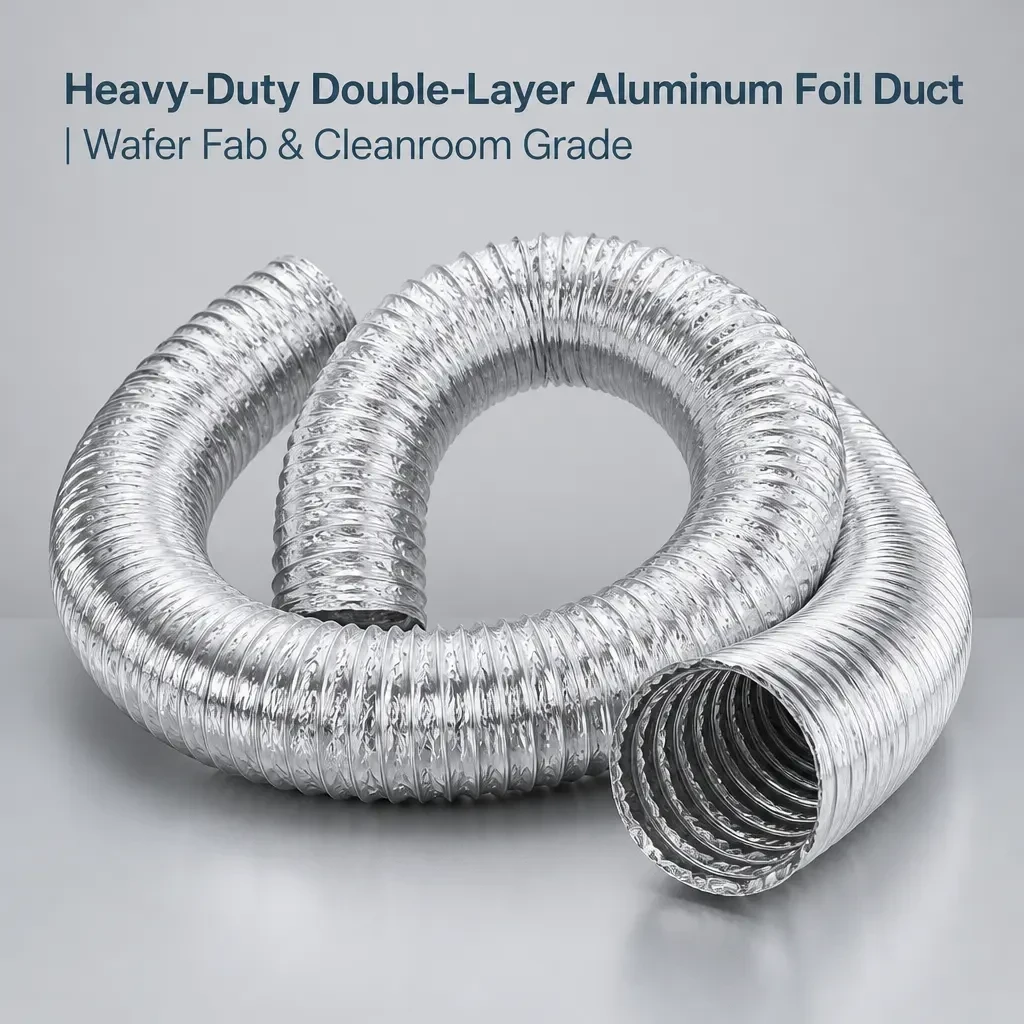
Double-Layer Aluminum Foil Flexible Duct with Galvanized Helix: High-Temperature Fume Extraction Guide
Technical guide to the double-layer aluminum foil flexible duct with galvanized steel helix: -30 to +200 °C, about 3000 Pa negative pressure, 50-300 mm diameters, 5 m lengths, and use in semiconductor, UV curing, laser and precision fume extraction.
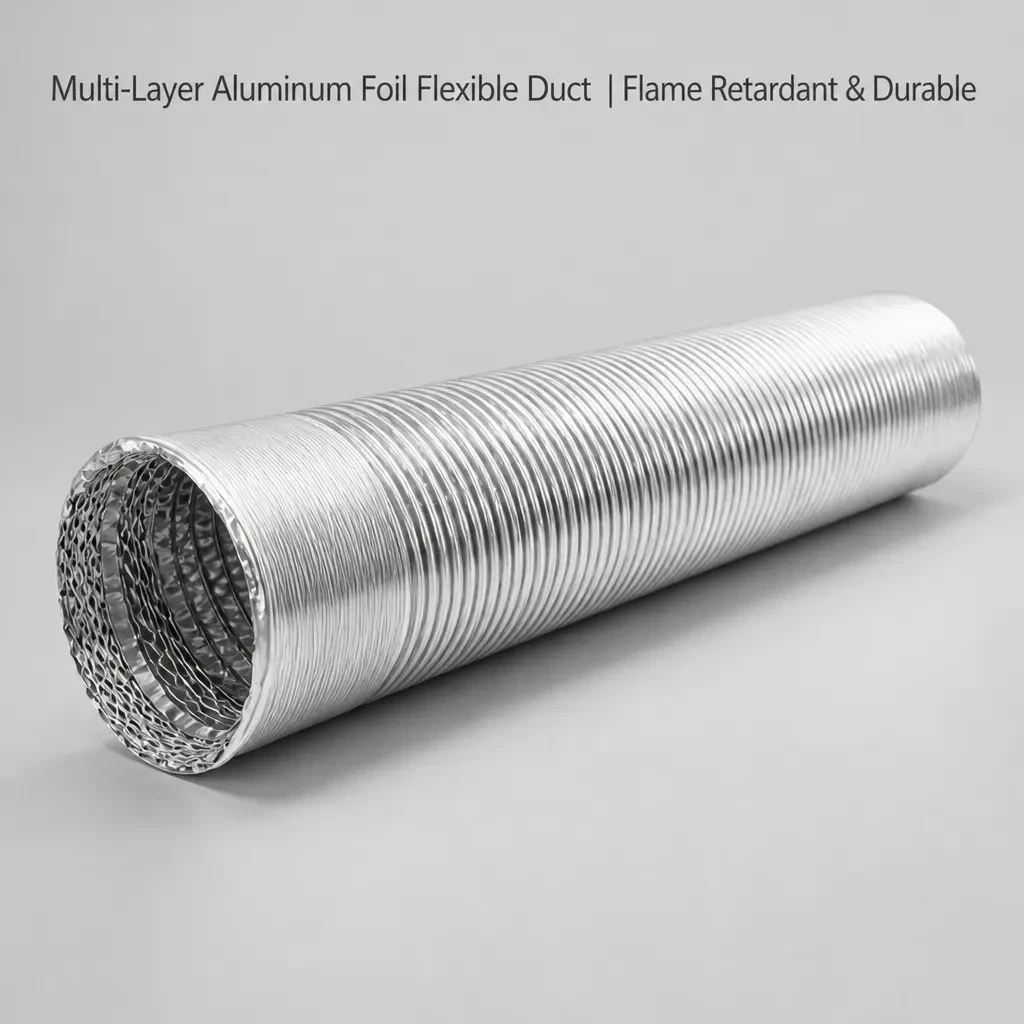
Four-Layer Aluminum Foil Flexible Duct Hose: Heavy-Duty HVAC and Industrial Exhaust Guide
Technical guide to the four-layer aluminum foil flexible duct hose: 4.5s laminated foil wall, 1.5 cm pitch steel helix, 2000 Pa negative pressure, B1 flame retardant, -30 to +150 °C, 50-600 mm diameters, plus HVAC, SMT and exhaust applications.