
PTFE-Coated Fiberglass Fabric Ventilation Hoses for Food, Pharmaceutical & Chemical Industries

ECOOSI PTFE-coated fiberglass fabric ventilation hoses deliver chemical resistance, high-temperature performance, and durability for food processing, pharmaceutical manufacturing, and chemical plant ventilation systems.
PTFE-Coated Fiberglass Fabric Ventilation Hoses
ECOOSI PTFE-coated fiberglass fabric ventilation hoses are engineered for demanding industrial environments in food processing, pharmaceutical manufacturing, and chemical production. This guide covers material properties, performance advantages, and applications.
What Is PTFE-Coated Fiberglass Fabric?
PTFE-coated fiberglass fabric combines two high-performance materials:
- Fiberglass base fabric — Provides tensile strength and continuous operating temperatures up to 260°C (500°F).
- PTFE coating — Delivers chemical inertness, non-stick surface, and resistance to industrial chemicals and corrosive fumes.
Key Performance Properties
1. Temperature Resistance
Operates continuously from -70°C to +260°C (-94°F to +500°F), with short-term peak tolerance up to 300°C (572°F). Covers hot-air drying, steam exhaust, and cryogenic venting.
2. Chemical Compatibility
PTFE resists acids, alkalis, organic solvents, oxidizing agents, and cleaning chemicals without swelling, cracking, or leaching contaminants.
3. Non-Stick Surface
The smooth PTFE interior minimizes airflow resistance and prevents particulate buildup, reducing pressure drop and simplifying maintenance.
4. Flame Retardancy
PTFE-coated fiberglass fabrics are inherently flame retardant and self-extinguishing, producing minimal smoke and no toxic combustion products.
Industry Applications
Food Processing
- Bakery ovens — Exhaust hot air at 180–250°C without degradation.
- Dairy & beverage CIP — Withstand caustic washdown vapors during cleaning cycles.
- Meat processing — Maintain hygienic air extraction with frequent sanitization.
Pharmaceutical Manufacturing
- Cleanroom HVAC — Particle-free, non-outgassing ductwork for cleanroom standards.
- Solvent recovery — Handle IPA, acetone, ethanol vapors in coating and synthesis areas.
- Sterilizer exhaust — Manage thermal shock from autoclave venting without fatigue.
Chemical Production
- Reactor off-gas — Capture corrosive acid and alkali fumes from reactions.
- Solvent storage — Vent tanks with PTFE-lined ducts resistant to permeation.
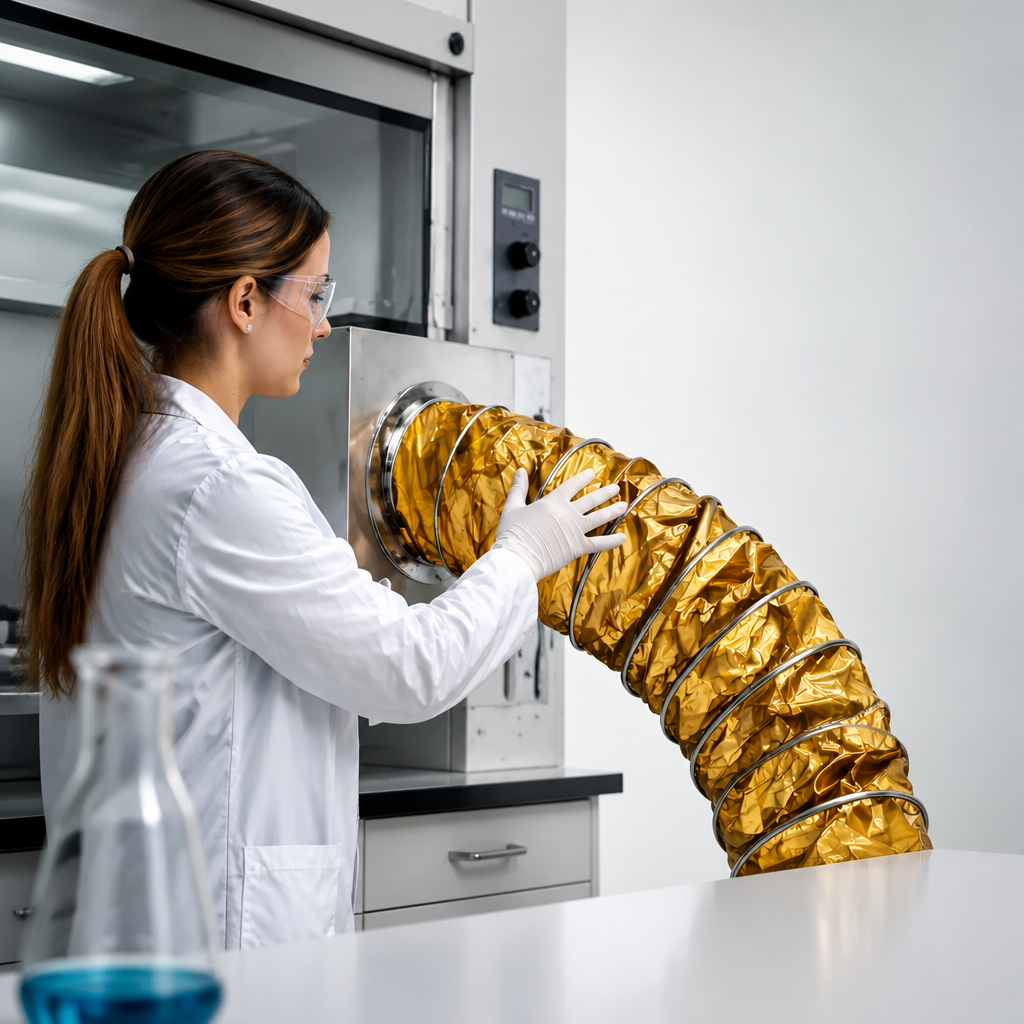
- Lab fume hood exhaust — Chemically resistant trunk ducting for lab ventilation.

Installation Guidelines
Sizing
Select duct diameter based on required CFM and velocity. For powder-laden streams, maintain minimum transport velocity (18–23 m/s) to prevent settling.
Support & Routing
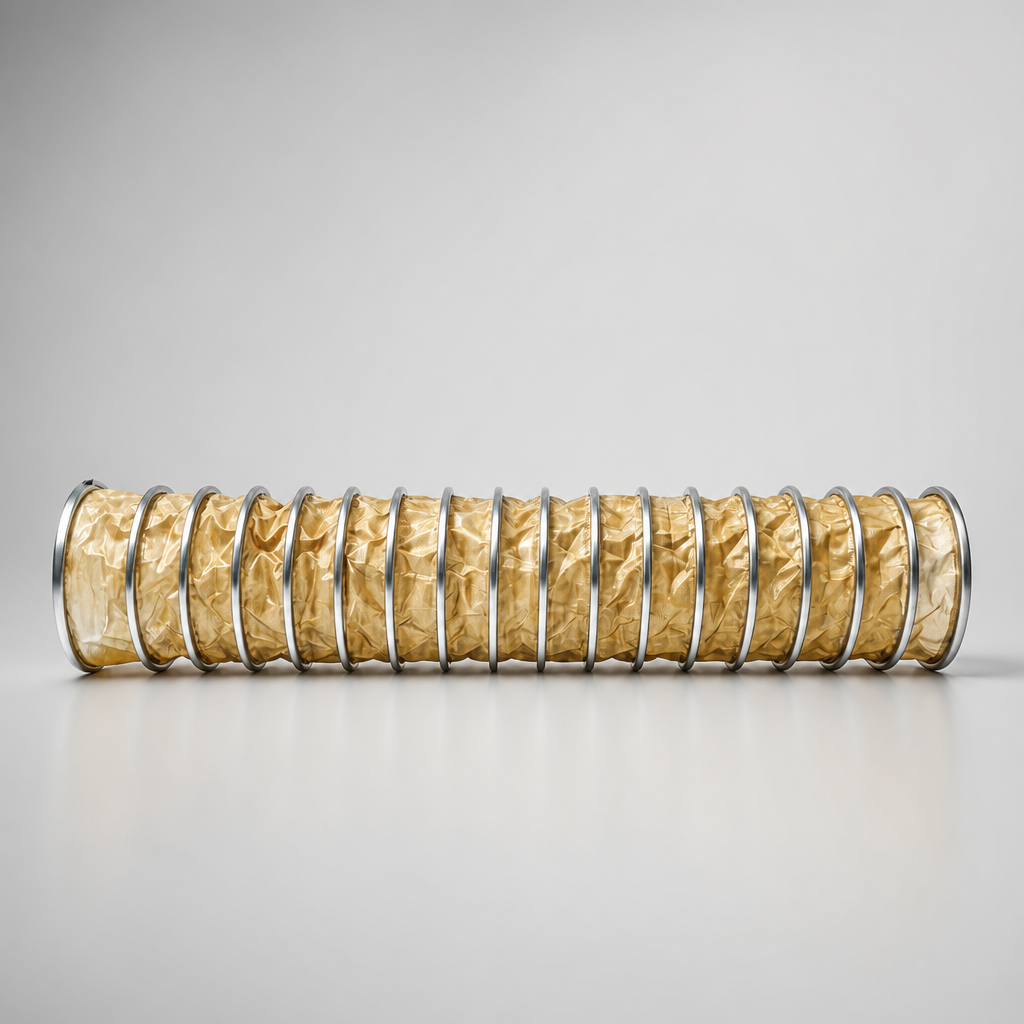
Use stainless steel support rings at 1.5–2 m intervals. Avoid sharp bends below 1.5× duct diameter radius.
Maintenance
Inspect quarterly for coating delamination and clamp loosening. Clean with mild detergent; replace sections showing >10% coating loss.
Why Choose ECOOSI?
- Custom diameters from 50 mm to 1200 mm with standard and bespoke lengths.
- Multiple PTFE coating weights optimized for chemical severity and flexibility.
- Full traceability with batch-level material certificates.
- Global technical support including on-site survey and CAD drawings.
Conclusion
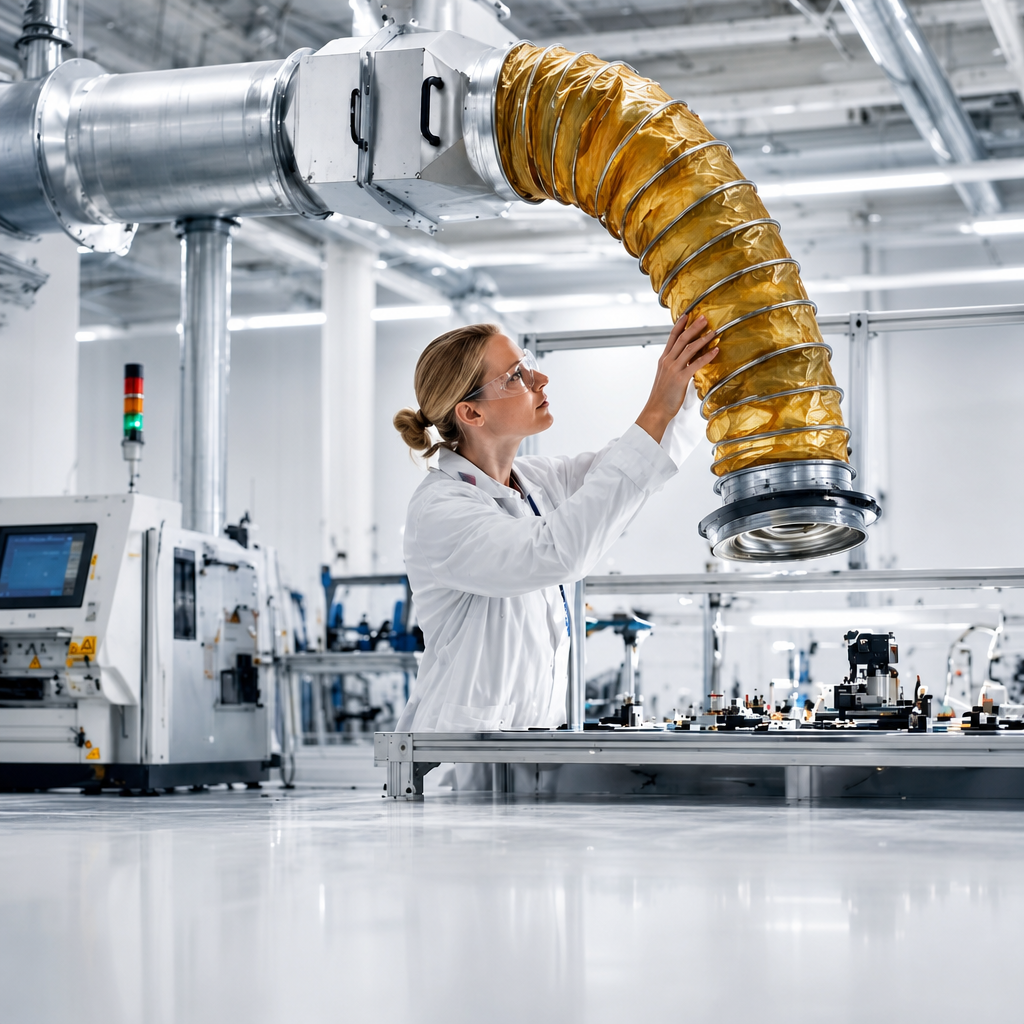
PTFE-coated fiberglass fabric ventilation hoses offer thermal endurance, chemical inertness, and mechanical durability for food, pharmaceutical, and chemical sectors. ECOOSI PTFE-coated ducts provide long-term ventilation reliability and reduced maintenance costs.
Contact the ECOOSI engineering team for technical specifications or project consultation.