
Explosion-Proof Anti-Static Flexible Ventilation Duct: PVC Ducting Guide for Flammable Areas
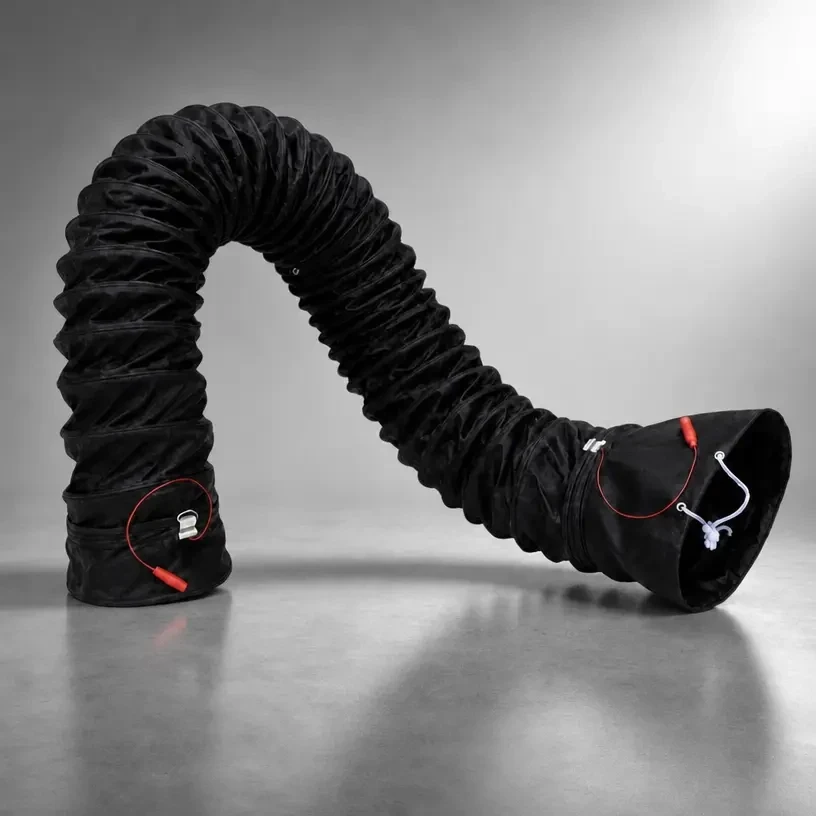
How anti-static PVC flexible ducting controls static charge in flammable and explosive areas: conductive wall around 2 x 10^5 ohm, spiral steel wire helix, 150-1000 mm diameters, 10 m lengths, -20 to +100 °C, plus grounding and installation checks.
The ECOOSI explosion-proof anti-static flexible ventilation duct is a black PVC duct with a conductive wall and a spiral steel wire helix, made for ventilation in flammable and explosive areas. The conductive surface has a resistance of about 2 × 10⁵ Ω, so static charge carried by the air stream is taken away through the grounded helix instead of building up on the duct wall. It is available from 150 mm to 1000 mm internal diameter, in 10 m standard lengths, and works from -20 °C to +100 °C.
This guide covers the construction, how static control works in practice, the properties that matter on site, the applications it suits, and the checks to make when installing it with an explosion-proof fan.
What Is an Explosion-Proof Anti-Static Flexible Ventilation Duct?
It is a compressible PVC duct built for extract and supply air in areas where flammable gas, vapour or dust may be present. Two material choices separate it from a standard PVC duct:
- A conductive PVC wall. The fabric is compounded so that surface resistance stays around 2 × 10⁵ Ω, which is low enough to dissipate static charge instead of holding it.
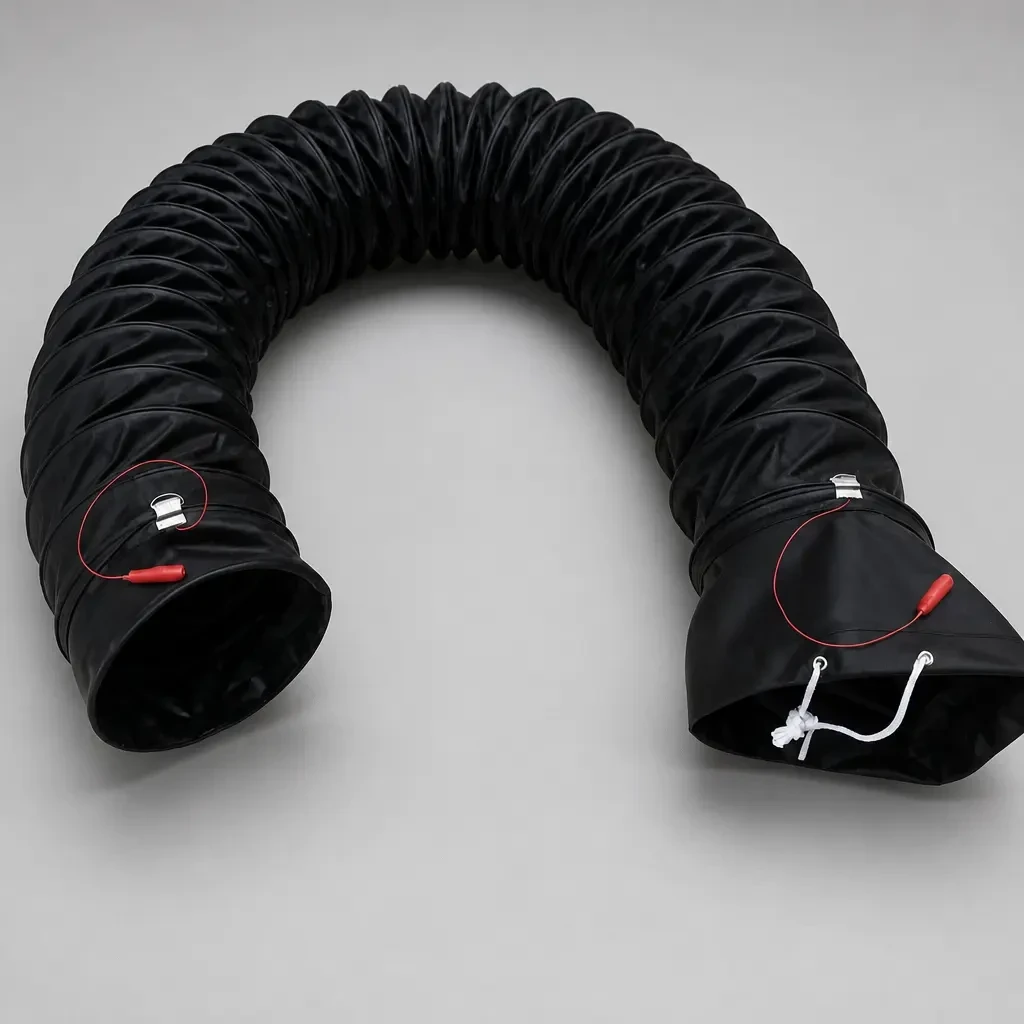
- A continuous steel helix that can be earthed. The spiral wire gives the duct its shape and provides a conductive path from end to end, where the grounding leads and clamps connect it to the ducting system or to a local earth point.
Because the wall is a single seamless tube, the duct is airtight along its length. There are no stitched seams for vapour to leak through, and the smooth bore keeps pressure drop low on long extraction runs.
Construction and Materials
| Element | Specification |
|---|---|
| Wall | Conductive, flame-retardant PVC net fabric in a single seamless tube |
| Helix | Spiral steel wire wrapped by a wear-resistant rubber strip |
| Surface resistance | Approximately 2 × 10⁵ Ω |
| Ends | Cuffed ends with grounding lead, clamp and tie points |
| Nominal diameter | 150 mm to 1000 mm |
| Temperature range | -20 °C to +100 °C |
| Standard length | 10 m per piece |
| Packing | Compressed for transport and storage |
A note on wording: explosion-proof is the product designation used for this duct range. Whether a specific installation is acceptable in a classified area depends on grounding continuity, the fan, the routing and the standards applied on that site.
How Static Control Works in Practice
Air moving through a duct, and the dust or droplets it carries, generates static charge. In an ordinary PVC duct that charge has nowhere to go and can build up on the wall until it discharges as a spark. In a flammable atmosphere, that is the ignition risk this duct is designed to reduce.
The anti-static build handles the charge in two steps:
- The conductive wall spreads the charge across the surface instead of letting it concentrate in one place.
- The steel helix and grounding leads carry it away to the earthed ducting system or to a local earth point.
A surface resistance around 2 × 10⁵ Ω sits in the conductive range: low enough to drain charge quickly, high enough that the wall does not behave like a bare conductor. What matters on site is continuity. Every joint, every clamp and every grounding lead has to complete the path to earth.
Performance Properties
- Airtight and seamless — a single tube wall limits leakage along the run, which matters when extracting vapours.
- Wear resistant — the helix is protected by a wear-resistant rubber strip, and the wall resists abrasive dust in extraction duty.
- Corrosion resistant — PVC handles many acids, alkalis and cleaning agents at moderate temperature.
- Compressive strength — the duct keeps its bore under negative pressure and resists being crushed in service.
- Highly compressible — the duct retracts for storage and transport, which suits site work and depot stock.
- Highly flexible — tight bends and offsets are possible without extra fittings.
- Flame retardant — the PVC compound is formulated to resist flame spread.
- Conductive — surface resistance around 2 × 10⁵ Ω for static dissipation.
Typical Applications
The duct is used with explosion-proof fans for supply and extract air in flammable and explosive places, and wherever chemical odours have to be pulled away from the working area:
- Petrochemical plants — tank venting, transfer point extraction and general area ventilation.
- Pharmaceutical production — solvent and odour extraction from process rooms and filling lines.
- Oil tankers and tank cleaning — gas freeing and vapour extraction from tanks and compartments.
- Chemical storage and drum filling — local extraction at filling and decanting points.
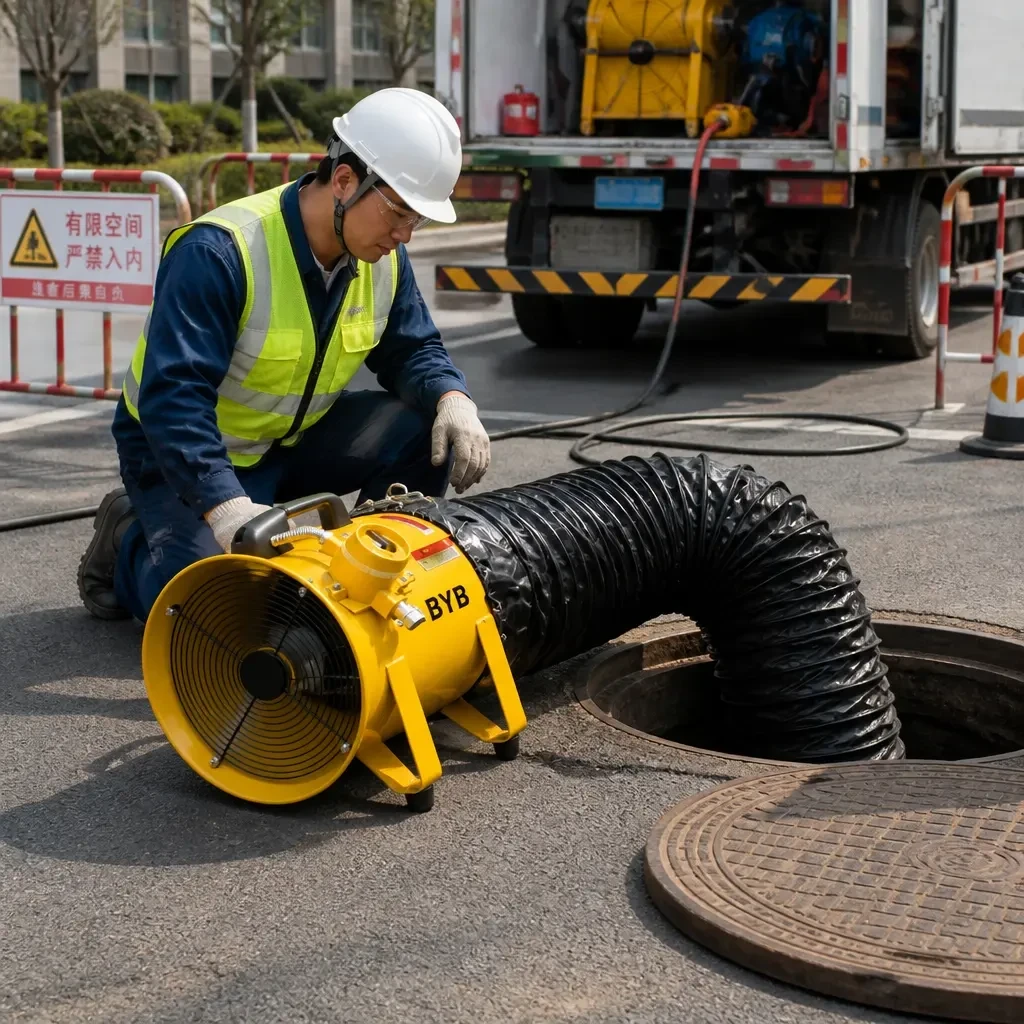
- Confined space entry — forced ventilation of manholes, pits and vessels with a portable blower before entry.
- Workshops and paint areas — extraction where solvent vapour may be present.
Temperature and Media Limits
The working range is -20 °C to +100 °C. Above that, PVC softens and loses shape, so hot exhaust needs a different build — see the high temperature ducting range. PVC also has limits with certain media: some solvents, concentrated oxidising acids and aromatic compounds attack it. Check the medium, its concentration and the working temperature before specifying the duct for a chemical duty.
Sizing and Ordering
Standard diameters run from 150 mm to 1000 mm internal diameter, supplied in 10 m lengths with cuffed ends. Custom lengths, additional cuffs and OEM packing are available for distributors and project orders. When sizing, match the duct diameter to the fan outlet and keep the run as short and straight as the layout allows, since every bend costs pressure.
Installation and Grounding Checklist
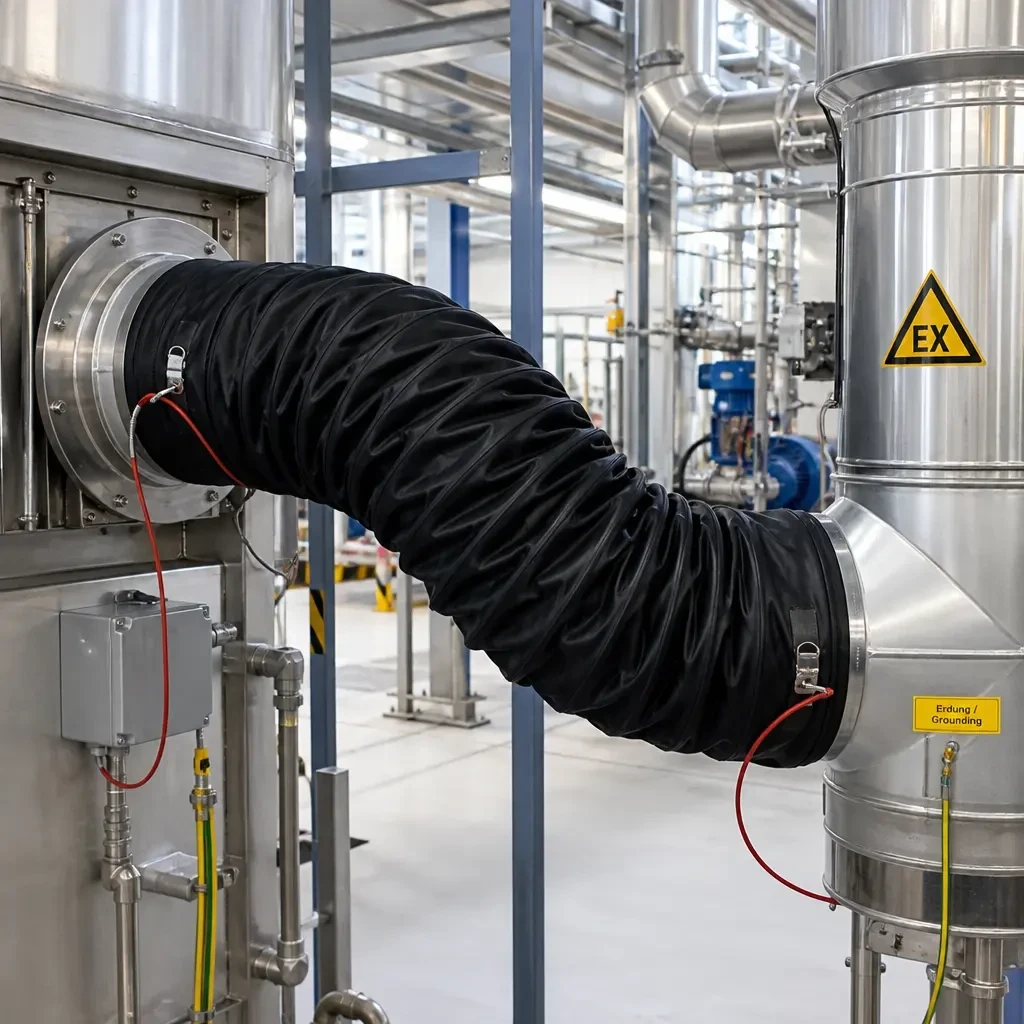
- Bond the helix at both ends. Connect the grounding lead to the earthed ducting, fan casing or a dedicated earth point at each end of the run.
- Check continuity after assembly. Measure resistance from one end of the duct to the earth point once clamps and leads are fitted, and re-check after any section is replaced.
- Use a compatible fan. The duct is normally paired with an explosion-proof fan; the fan casing and duct helix should share the same earth path.
- Keep the run supported and short. Support horizontal lengths so the duct carries only its own weight, and avoid long runs with sharp bends.
- Protect the wall from abrasion. Keep the duct clear of sharp edges, rough floors and hot surfaces, and avoid dragging it during installation.
- Inspect regularly. Look for damaged grounding leads, loose clamps, cuts in the wall and exposed helix, and replace sections that no longer hold continuity.
Frequently Asked Questions
What does anti-static mean for this duct?
The PVC wall is conductive, with a surface resistance of about 2 × 10⁵ Ω, and the steel helix is bonded to earth through grounding leads. Charge generated by the air stream is carried away instead of accumulating on the wall.
Which diameters and lengths are available?
150 mm to 1000 mm internal diameter, supplied in 10 m standard lengths. Custom lengths and additional cuffs can be made for project orders.
What is the temperature range?
-20 °C to +100 °C. For hotter exhaust, a silicone or fiberglass high temperature duct is the correct choice.
Can it be used with a portable blower for confined space entry?
Yes. Confined space ventilation before entry is a common use: the blower feeds fresh air down the duct, and the duct and blower are bonded to earth before work starts.
Does the duct work without grounding?
No. The conductive wall spreads charge, but it has to reach earth through the helix, clamps and grounding leads. Without a complete earth path the static control does not work, which is why continuity is checked after installation.
Is it suitable for corrosive chemical fumes?
PVC resists many acids, alkalis and cleaning chemicals at moderate temperature. It is not suitable for media that attack PVC, such as some solvents and concentrated oxidising acids. Check the medium and the concentration before ordering.
Choosing the Right Duct
For flammable and explosive areas, the deciding factors are the conductivity of the wall, the continuity of the earth path and the temperature of the air stream. This anti-static PVC duct covers the -20 °C to +100 °C band from 150 mm to 1000 mm; the wider PVC ducting range covers general ventilation duties, and the PVC vs PU vs silicone comparison helps when the choice is between materials. For sizing, grounding details or samples, contact the ECOOSI technical team.
Related Articles
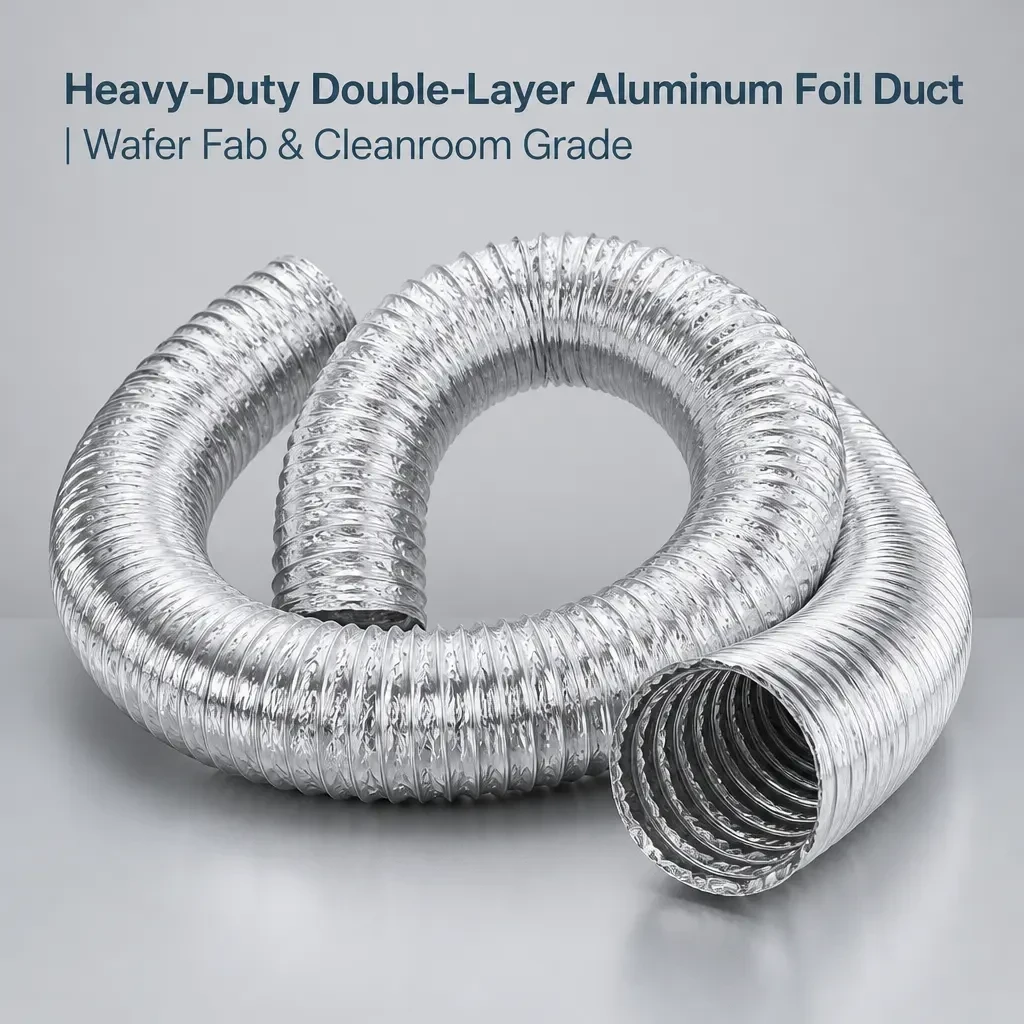
Double-Layer Aluminum Foil Flexible Duct with Galvanized Helix: High-Temperature Fume Extraction Guide
Technical guide to the double-layer aluminum foil flexible duct with galvanized steel helix: -30 to +200 °C, about 3000 Pa negative pressure, 50-300 mm diameters, 5 m lengths, and use in semiconductor, UV curing, laser and precision fume extraction.
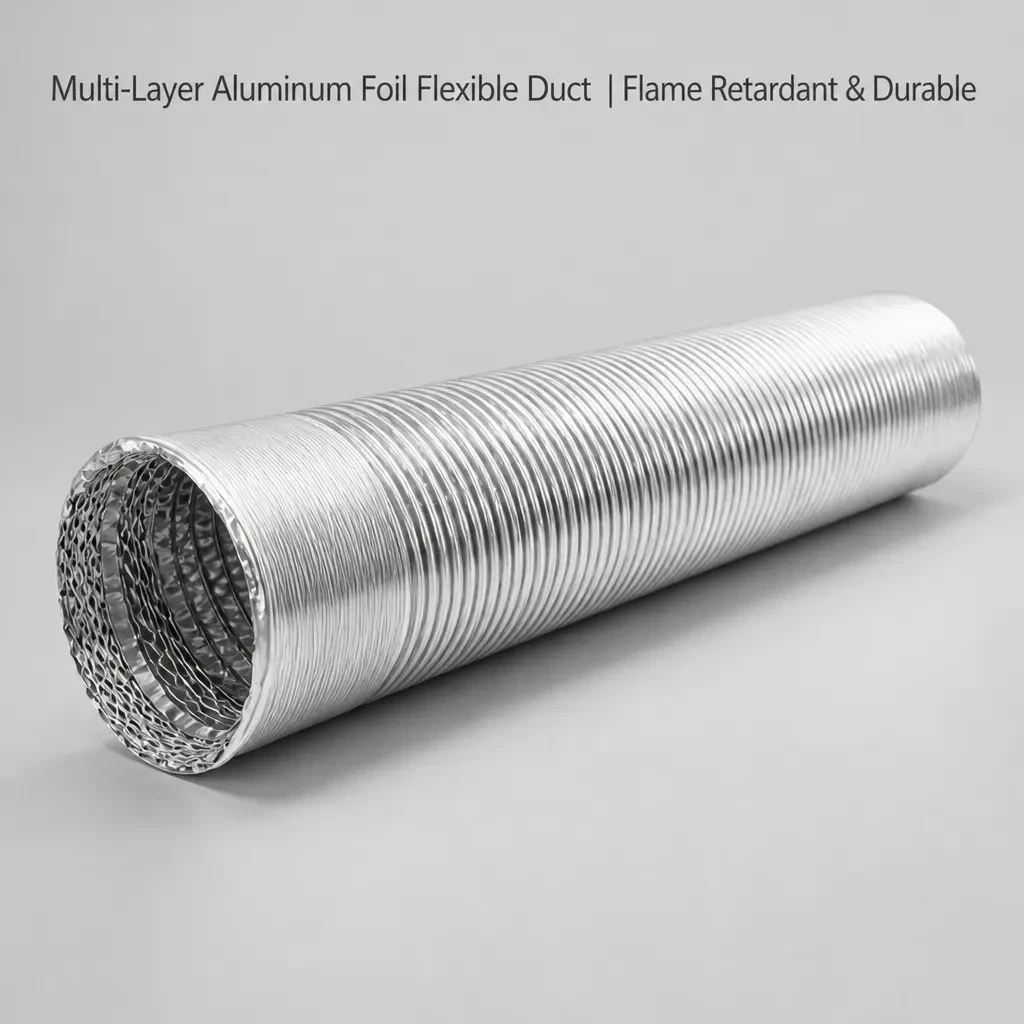
Four-Layer Aluminum Foil Flexible Duct Hose: Heavy-Duty HVAC and Industrial Exhaust Guide
Technical guide to the four-layer aluminum foil flexible duct hose: 4.5s laminated foil wall, 1.5 cm pitch steel helix, 2000 Pa negative pressure, B1 flame retardant, -30 to +150 °C, 50-600 mm diameters, plus HVAC, SMT and exhaust applications.
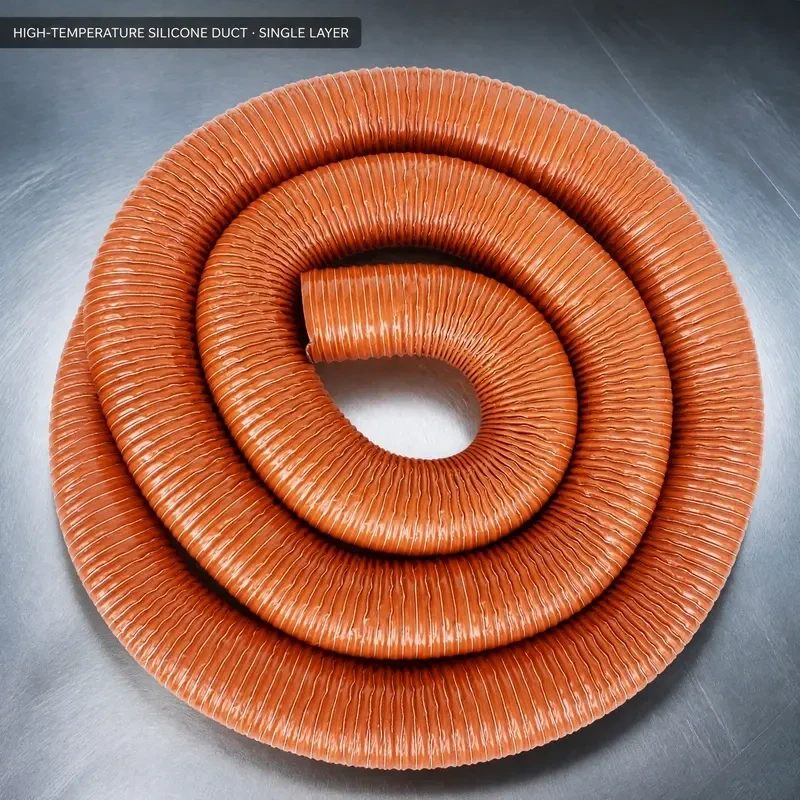
Single Layer Silicone Duct Hose: High-Temperature Flexible Ducting Guide
A practical guide to single layer silicone duct hoses: silicone coated glass fiber construction, -70 °C to 260 °C working range, 16-254 mm diameters, standard 4 m lengths or custom lengths with cuffs, installation checks and application notes.