Ecoosi EISD Silicone Ducting: High-Temperature Hose Guide
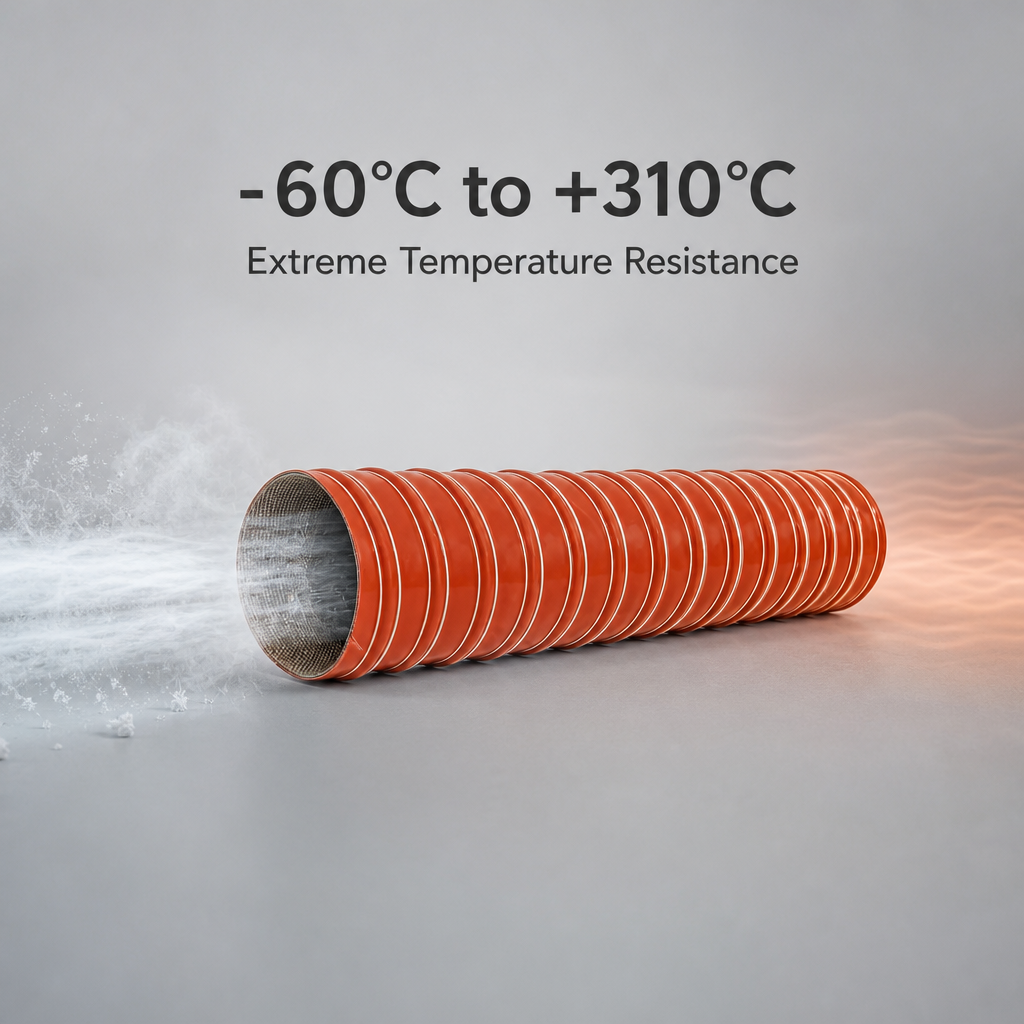
Ecoosi EISD silicone ducting is a high-temperature, flame-retardant flexible hose built from dual fiberglass layers, high-grade silicone coating and a steel wire helix, rated from -60 °C to +310 °C for hot air, fume and dust extraction.
Why Do Identical-Looking Red High-Temperature Hoses Fail at Different Rates?
Two red, high-temperature hoses can look identical on a spec sheet yet behave very differently after a few months in service. Lower-cost versions often harden, crack, collapse under suction, or leak hot air, causing unplanned downtime that costs far more than the hose itself. In an industrial air-handling system the hose is the artery that moves hot air, extracts fumes, and supports drying equipment, so its reliability directly affects line uptime.
This guide explains what separates Ecoosi Silicone Ducting (EISD), a high-temperature flame-retardant flexible hose, from single-layer alternatives, and how to decide whether it fits your application.
Inside the Hose Wall: A True Multi-Layer Composite
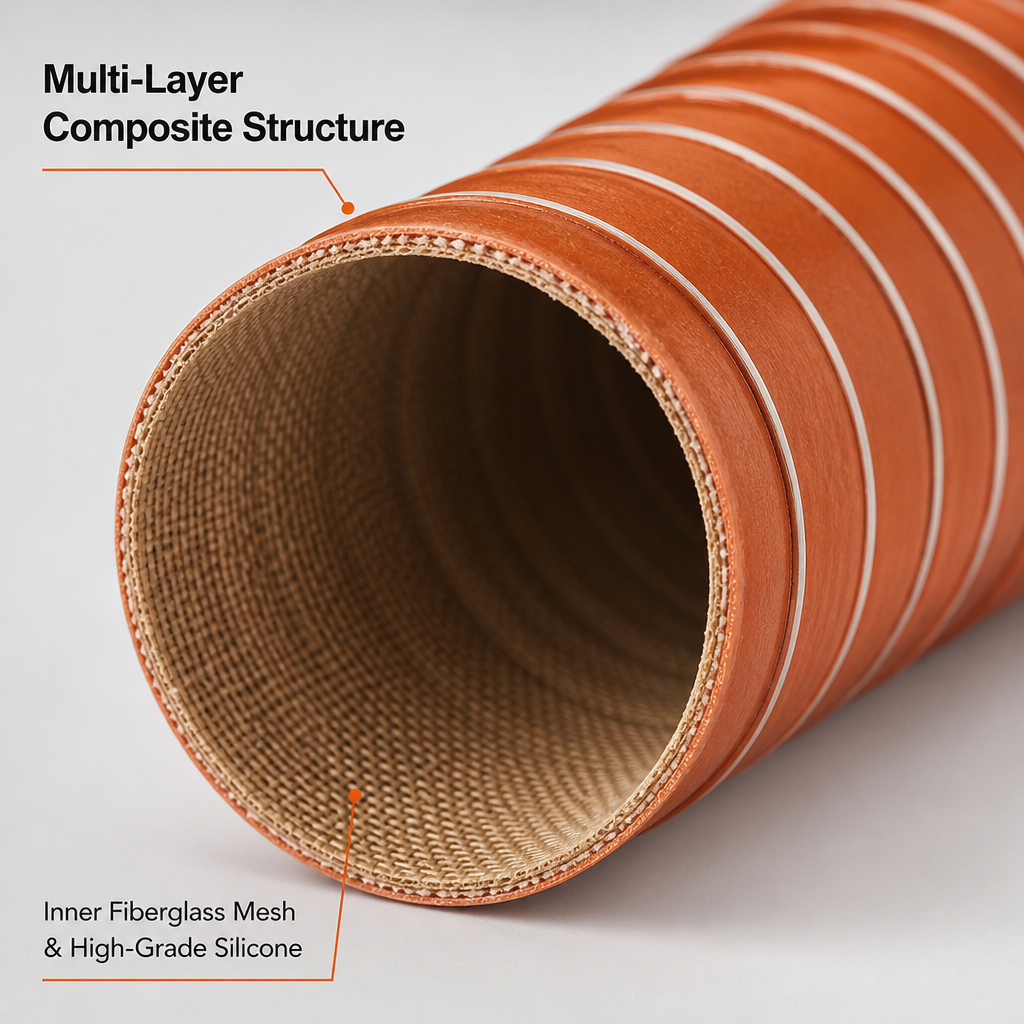
Many competing hoses are a single layer of fiberglass with a thin silicone coating, a construction that can fail after only a few thermal cycles. EISD is built as an engineered composite in which every layer has a defined job:
- Dual-layer fiberglass fabric - the structural backbone that carries heat resistance and tensile strength.
- High-grade silicone coating - encapsulates the fabric and seals the wall against hot steam and corrosive fumes.
- Internal steel wire helix - high-carbon steel or 304 stainless steel, resisting negative pressure and keeping the bore round under vacuum.
- External fiberglass cord - locks the wall together and reduces tearing from repeated bending.
Service Range: -60 °C to +310 °C
EISD stays flexible and crack-resistant in extreme cold down to -60 °C, and resists degradation, crumbling and oily residue leaching in continuous hot service up to +310 °C, including steam-laden air.
By comparison, hoses marketed at 280 °C often age and harden quickly when held above 200 °C for long periods and may need full replacement within months. Specifying a genuine margin above your real operating temperature is one of the cheapest ways to extend service life.
Smooth Bore and Reinforced Helix: Lower Pressure Drop
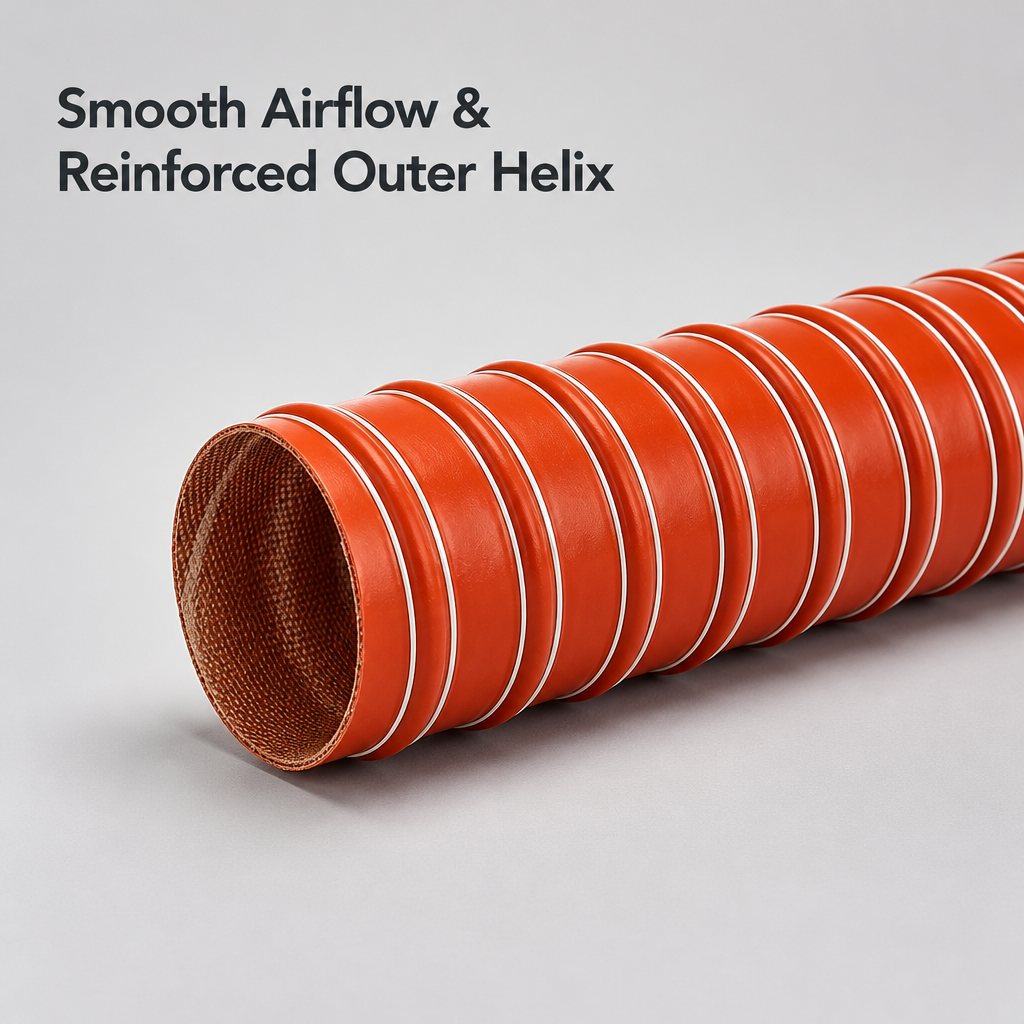
Low-cost hoses frequently have rough, uneven inner walls where hot air, chemical fumes and dry materials snag and accumulate, eventually causing blockages. EISD is manufactured with a smooth interior that minimizes resistance to hot airflow, so fume extraction stays efficient, dry-material transport stays consistent, and cleaning intervals stay long.
The reinforced outer helix works with the smooth bore to keep the cross-section stable, protecting airflow performance over the full length of the run.
Flexible Enough for Tight Routing, Stable Under Pressure
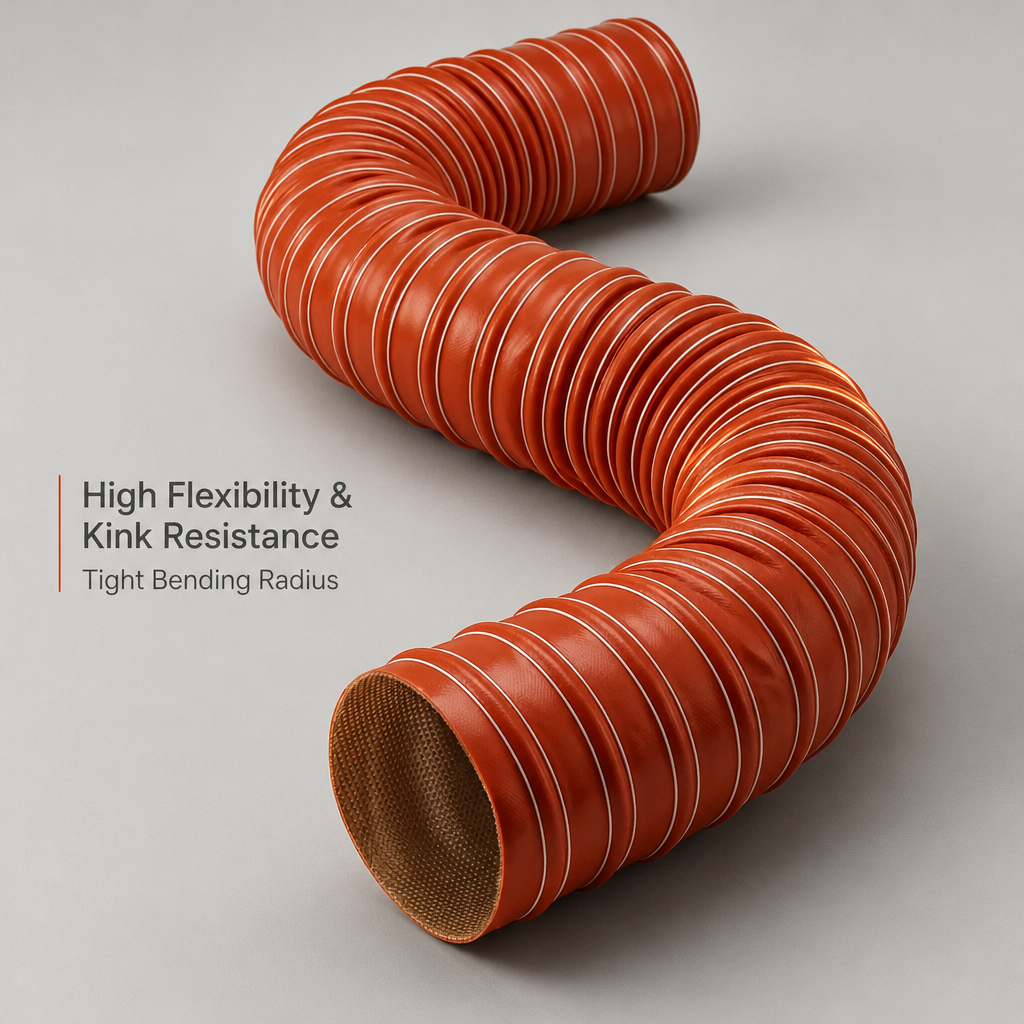
Industrial layouts rarely run straight. EISD bends through tight radii without kinking or collapsing, and resists both positive and negative pressure across a wide diameter range, so it will not flatten under vacuum suction or bulge under blower pressure.
Typical Applications
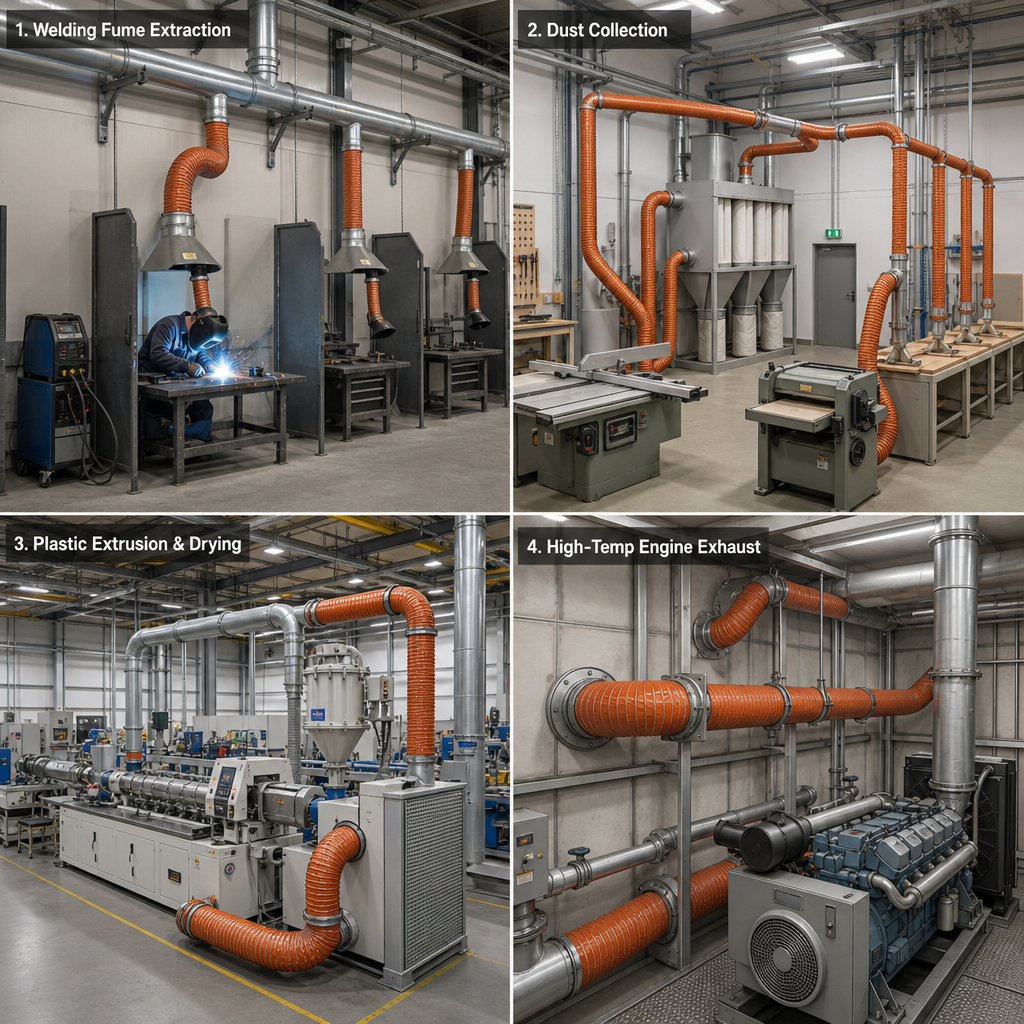
EISD is specified wherever hot air, fumes or dust must be moved reliably:
- Welding fume extraction - capture arms and source-capture hoods at welding stations.
- Dust collection - woodworking, grinding and bulk material handling extraction lines.
- Plastic extrusion and drying - hot-air conveyance to dryers, hoppers and extrusion lines.
- High-temperature engine and equipment exhaust - test cells and engine rooms.
- Material drying machinery - intake and exhaust ducting for dryers and ovens.
- Chemical fume and hot-gas extraction - corrosive or high-temperature exhaust streams.
It also suits environments with wide temperature swings and confined spaces where the hose must be bent repeatedly during installation.
Choose the Helix for Your Environment
- High-carbon steel wire - the cost-effective choice for standard, dry operating conditions.
- 304 stainless steel wire - recommended for humid, washdown or corrosive environments, reducing the risk of rust and wire failure.
Sizes, Stock and Custom Options
The EISD range covers inner diameters from 16 mm to 400 mm, with dozens of standard sizes held in stock. Custom dimensions are available so existing equipment connections do not need to be modified to fit the hose.
Quick Installation, Secure Connection
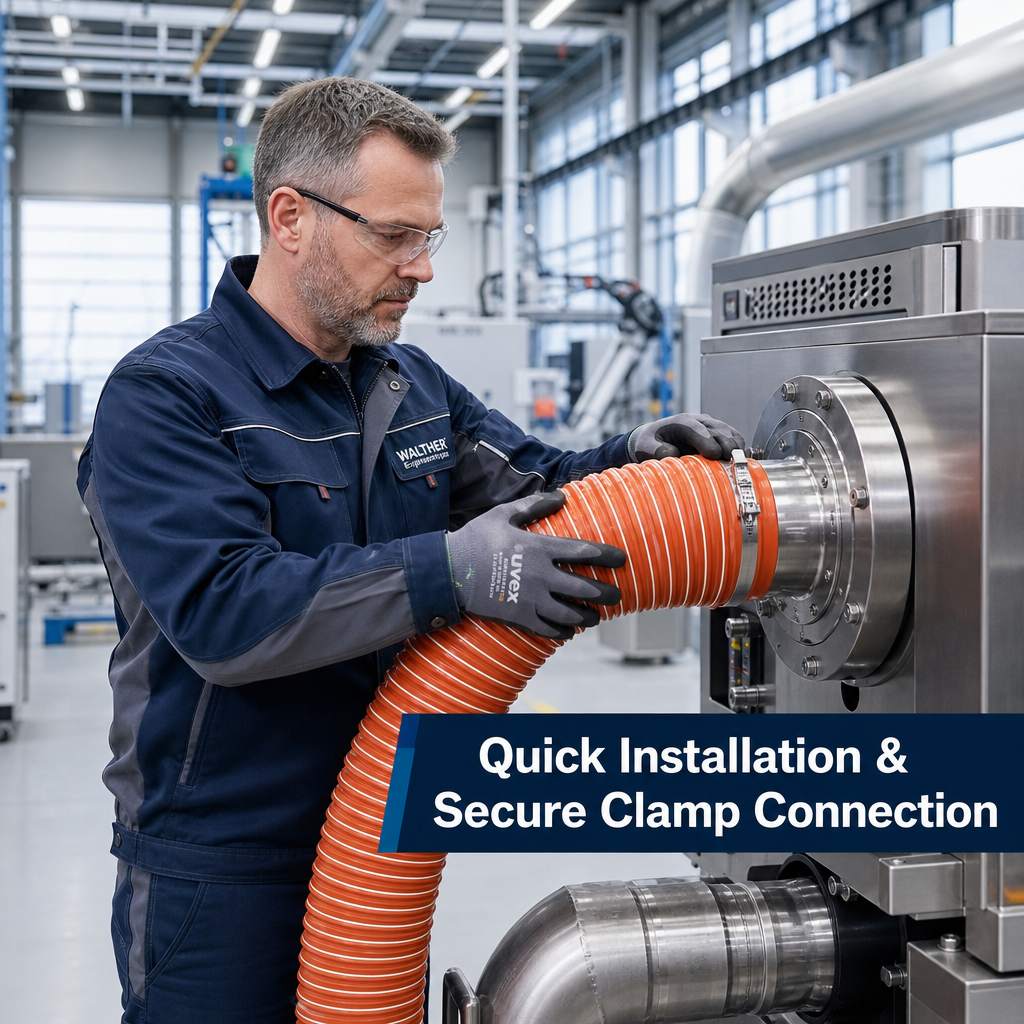
EISD connects with standard clamps and cuffs for fast installation. A secure clamp connection at each end keeps the joint airtight under vibration and thermal cycling, which is where many field failures actually start.
Unit Price vs Total Cost of Ownership
Buyers who switch from budget hoses report replacing them two or three times a year. Extending service life cuts both downtime and maintenance labour, so the relevant number in a procurement comparison is the total cost of ownership across the lifecycle of the hose, not the unit price on the quotation.
Is EISD the Right Choice for You?
EISD is a strong fit when your application involves:
- Hot-air conveyance and equipment intake ducting
- Piping for material drying machinery
- Extraction of chemical fumes and high-temperature exhaust gases
- Wide temperature fluctuation, from intense cold to high heat
- Confined spaces requiring frequent bending of the hose
- Long-term stable operation where downtime for hose replacement is unacceptable
Frequently Asked Questions
What temperature range does Ecoosi EISD silicone ducting cover?
EISD is rated from -60 °C to +310 °C, staying flexible in deep cold and resisting degradation, crumbling and residue leaching at continuous high temperature.
What is the hose wall made of?
A dual layer of fiberglass fabric encapsulated in high-grade silicone, with an internal steel wire helix in high-carbon or 304 stainless steel and an external fiberglass cord.
Which helix wire should I choose?
High-carbon steel for standard dry conditions, and 304 stainless steel for humid or corrosive environments.
What sizes are available?
Inner diameters from 16 mm to 400 mm, with many standard sizes in stock and custom dimensions on request.
Conclusion
Appearance can be copied; material layering, silicone formulation, helix specification and workmanship cannot. A reliable high-temperature hose protects more than itself: it protects the stability of the whole production line and prevents safety hazards caused by hot-air leaks. If frequent hose failures or high-temperature routing are current pain points, share your operating conditions with the Ecoosi engineering team for a matched recommendation.